When you think of Panama, the first image that likely comes to mind is the Panama Canal—a colossal feat of engineering, massive steel locks, and container ships the size of skyscrapers.
But just minutes away from the industrial hum of the Miraflores Locks lies a completely different world. It is silent, lush, and teeming with life.
Welcome to Gatun Lake, a massive artificial body of water that serves as the heart of the Canal’s operation and, unintentionally, became one of the world’s most accessible wildlife sanctuaries.
An Accidental Eden
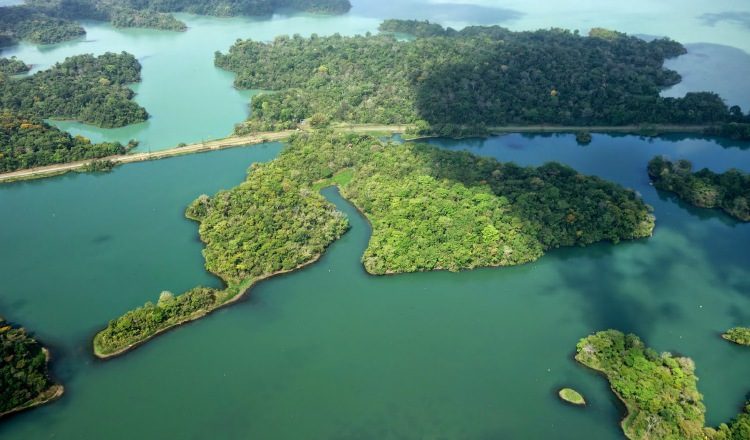
Formed in 1913 by damming the Chagres River, Gatun Lake was, at the time, the largest man-made lake in the world. When the valley was flooded to create the bridge between the Atlantic and Pacific, the hilltops turned into islands.
These islands became life rafts for the jungle’s inhabitants. Today, they are protected nature reserves where animals live without predators like jaguars (which remained on the mainland), allowing their populations to flourish.
Did you know? As you traverse the lake, you will often be sharing the water with massive Panamax vessels. Seeing a wild crocodile on a bank with a global cargo ship in the background is a surreal contrast you can only find in Panama.
The “Big Three” of Gatun Wildlife
While the lake is home to hundreds of species, most visitors come for the “Monkey Island” boat tours. Here is what you are almost guaranteed to see:
1. The Primates
The islands of Gatun Lake are famous for their monkeys. You will likely encounter:
- White-Faced Capuchins: Highly intelligent and curious, these monkeys often come right down to the water’s edge (and sometimes onto the boats) to inspect visitors.
- Mantled Howler Monkeys: You will usually hear them before you see them. Their deep, guttural roar can travel for miles through the jungle.
- Geoffroy’s Tamarins: These are smaller, elusive, and incredibly cute, distinguished by the patch of white fur on the back of their necks.
2. The Reptiles
Keep your hands inside the boat! The waters and banks are home to ancient predators.
- Spectacled Caimans: Often seen sunning themselves on muddy banks or floating like logs with only their eyes visible.
- Green Iguanas: Look up into the branches overhanging the water; you might see massive bright green or orange iguanas resting in the shade.
- Jesus Christ Lizards: Named for their ability to run across the surface of the water when startled.
3. The Birds
Gatun Lake is a birder’s paradise.
- Keel-billed Toucans: With their rainbow-colored beaks, they are often spotted flying between treetops.
- Snail Kites: Raptors that specialize in hunting the large apple snails found in the lake.
- Various Herons and Egrets: Stalking the shallows for fish.
The Hidden Gem: Sloths
While not as active as the monkeys, Panama is famous for its sloths. On a boat tour, your guide will move slowly near the shoreline, scanning the high canopy. If you are lucky, you will spot a Three-Toed Sloth curled up in a ball or moving in slow motion through a Cecropia tree.
Pro Tip: Sloths are perfectly camouflaged as “clumps of leaves.” Bring binoculars!
Practical Tips for Your Visit
If you are planning a trip to Gatun Lake, here is how to make the most of it:
- Go Early: The best time for wildlife viewing is early morning (7:00 AM – 9:00 AM). The animals are active before the tropical sun gets too hot.
- Book a Small Boat: Avoid large tour ferries. Small lanchas (speedboats) can navigate into the narrow channels and get much closer to the shoreline where the animals are.
- Combine It: Many tours combine Gatun Lake with a visit to the Gamboa Rainforest Resort or a visit to an Indigenous Emberá village nearby.
- Gear Up: Bring high-SPF sunscreen, a hat, insect repellent, and a camera with a good zoom lens.
Why It Matters
Visiting Gatun Lake isn’t just about snapping photos of monkeys; it’s a lesson in ecology. The rainforest surrounding the lake is vital for the Canal’s operation—the trees act as a sponge, maintaining the water levels required to float the ships.
By visiting, you are supporting eco-tourism that incentivizes the protection of this watershed. It is one of the few places on earth where global commerce and wild nature rely so heavily on one another.
So, when you visit Panama, see the locks, but don’t forget to take a boat ride into the wild.
 Panama All About
Leave a comment